


In the bustling world of material handling, three - wheel electric forklifts have emerged as versatile and efficient workhorses. As a leading supplier of three - wheel electric forklifts, I've witnessed firsthand the importance of understanding how various factors affect their performance. One crucial aspect that often concerns our customers is how the lift speed of a three - wheel electric forklift varies with the load it carries.
The Basics of Three - Wheel Electric Forklifts
Before delving into the relationship between lift speed and load, let's briefly understand the key features of three - wheel electric forklifts. These forklifts are known for their excellent maneuverability, making them ideal for tight spaces such as warehouses with narrow aisles. They are powered by electricity, which offers several advantages over traditional fuel - powered forklifts, including lower emissions, quieter operation, and reduced maintenance costs.
The lift mechanism of a three - wheel electric forklift typically consists of hydraulic cylinders and a mast system. When the operator activates the lift controls, an electric motor drives a hydraulic pump, which pressurizes the hydraulic fluid. This pressurized fluid then acts on the cylinders, causing the mast to raise or lower the forks and the load they carry.
Theoretical Relationship between Lift Speed and Load
From a theoretical perspective, the lift speed of a three - wheel electric forklift is inversely proportional to the load it is carrying. This relationship is based on the principles of physics, specifically the laws of work and power. The power output of the forklift's electric motor is relatively constant under normal operating conditions. Power (P) is defined as the work done (W) per unit time (t), and work is the force (F) applied over a distance (d), i.e., (P=\frac{W}{t}=\frac{F\times d}{t}).
When lifting a load, the force required is equal to the weight of the load (mg, where m is the mass of the load and g is the acceleration due to gravity). As the load increases, the force required to lift it also increases. Since the power output of the motor is fixed, according to the power formula, if the force (F) increases, and the power (P) remains constant, the time (t) taken to do the work (lift the load over a certain distance) must increase. In other words, the lift speed ((v = \frac{d}{t})) decreases as the load increases.
Real - World Factors Affecting Lift Speed
While the theoretical relationship provides a basic understanding, in the real world, several other factors can influence how the lift speed of a three - wheel electric forklift varies with the load.
Battery Condition
The battery is the power source of the electric forklift. A fully charged and healthy battery can supply the necessary power to the motor more efficiently. As the battery discharges or ages, its ability to deliver power may decrease. This means that even with a relatively light load, the lift speed may be slower if the battery is in poor condition. For example, a forklift with a depleted battery may struggle to lift a load at the same speed as it would with a fully charged battery, regardless of the load weight.
Hydraulic System Efficiency
The hydraulic system is responsible for converting the electrical energy from the battery into mechanical force to lift the load. Any inefficiencies in the hydraulic system, such as leaks, worn - out seals, or low hydraulic fluid levels, can affect the lift speed. A leak in the hydraulic system can cause a loss of pressure, reducing the force applied to the lift cylinders. This can result in a slower lift speed, especially when carrying heavier loads.
Forklift Design and Specifications
Different models of three - wheel electric forklifts have different power ratings and lift capacities. A forklift with a higher power rating and larger hydraulic cylinders can generally lift heavier loads at a faster speed compared to a lower - spec model. For instance, our 1.5 Ton Electric Forklift is designed with a powerful motor and a well - engineered hydraulic system to provide optimal lift speeds even when handling its maximum rated load.
Testing and Measuring Lift Speed with Different Loads
To accurately understand how the lift speed of our three - wheel electric forklifts varies with the load, we conduct comprehensive testing in our facilities. We use a variety of loads, ranging from light to the maximum rated capacity of the forklift. During the tests, we measure the time it takes for the forklift to lift the load from the ground to a specific height.
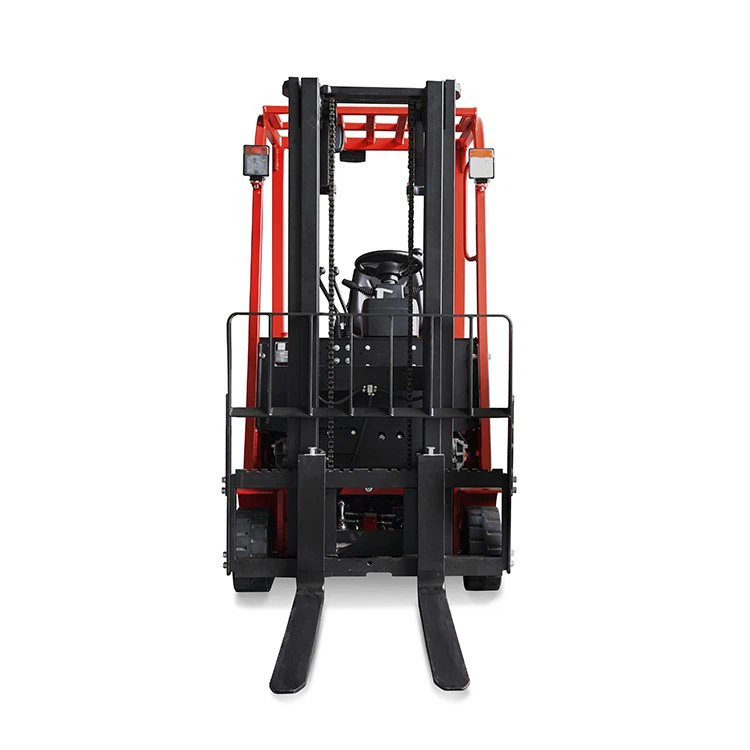

We start by testing the forklift with no load. This gives us a baseline lift speed, which represents the maximum speed the forklift can achieve under ideal conditions. Then, we gradually increase the load in increments and repeat the lift tests. Each time, we record the lift time and calculate the corresponding lift speed.
The results of these tests show a clear trend. As the load increases, the lift speed decreases. However, the rate of decrease is not always linear. At lower loads, the decrease in lift speed may be relatively small. But as the load approaches the maximum capacity of the forklift, the lift speed drops more significantly.
Implications for Customers
Understanding how the lift speed of a three - wheel electric forklift varies with the load is crucial for our customers. It helps them make informed decisions when choosing the right forklift for their specific applications.
If a customer has a high - volume operation where fast lift speeds are essential, they may need to consider a forklift with a higher power rating and larger lift capacity. This ensures that even when handling heavier loads, the forklift can maintain an acceptable lift speed, minimizing downtime and increasing productivity.
On the other hand, if the loads are relatively light and the operation is in a confined space, a smaller, more maneuverable forklift may be sufficient. In such cases, the focus may be more on the forklift's maneuverability rather than its maximum lift speed.
How We Support Our Customers
As a supplier of three - wheel electric forklifts, we are committed to providing our customers with the best possible products and support. We offer a wide range of forklift models with different power ratings and lift capacities to meet the diverse needs of our customers.
Our technical support team is always available to assist customers in choosing the right forklift for their specific applications. We can provide detailed information on lift speeds at different load levels based on our testing results. Additionally, we offer maintenance services to ensure that the forklifts operate at their optimal performance levels. Regular maintenance, including battery checks, hydraulic system inspections, and component replacements, can help maintain consistent lift speeds over time.
Contact Us for Your Forklift Needs
If you are in the market for a three - wheel electric forklift and want to learn more about how lift speed varies with load, or if you have any other questions regarding our products, we encourage you to contact us. Our sales team is eager to engage in a productive discussion about your requirements and help you find the perfect forklift solution for your business.
References
- Forklift Operator's Manuals
- Technical specifications of three - wheel electric forklifts
- Research papers on electric forklift performance and hydraulic systems


