


As a seasoned supplier of three - wheel electric forklifts, I've witnessed firsthand the crucial role that the controller plays in these remarkable machines. In this blog, I'll delve into the various functions and significance of the controller in a three - wheel electric forklift.
1. Power Management
The controller is the heart of the power management system in a three - wheel electric forklift. It regulates the flow of electrical power from the battery to the various components of the forklift, such as the drive motor and the hydraulic pump motor.
When the operator presses the accelerator pedal, the controller receives a signal indicating the desired speed. It then adjusts the amount of power supplied to the drive motor accordingly. This precise control allows for smooth acceleration and deceleration, which is not only important for the safety of the operator and the load but also for the overall efficiency of the forklift. For example, if the power is not properly regulated, the forklift may experience sudden jerks during acceleration, which can cause the load to shift or even fall off.
In addition to speed control, the controller also manages the power consumption of the forklift. It ensures that the battery is used efficiently by optimizing the power delivery based on the operating conditions. For instance, when the forklift is carrying a heavy load, the controller may increase the power output to the drive motor to maintain the required speed. On the other hand, when the forklift is moving without a load, the controller can reduce the power consumption to conserve the battery life. This intelligent power management helps to extend the operating time of the forklift on a single charge, which is a significant advantage in a busy warehouse environment.
2. Speed and Direction Control
One of the most obvious functions of the controller is to control the speed and direction of the three - wheel electric forklift. The operator can use the accelerator and brake pedals to control the speed, while the direction control lever is used to select between forward and reverse.
The controller interprets the signals from these input devices and translates them into appropriate commands for the drive motor. It can adjust the speed of the motor in a continuous and smooth manner, allowing for precise control of the forklift's movement. This is particularly important in tight spaces, such as narrow aisles in a warehouse, where the operator needs to maneuver the forklift with great accuracy.
Moreover, the controller also provides safety features related to speed and direction control. For example, it can limit the maximum speed of the forklift to prevent over - speeding, which can be dangerous, especially when the forklift is turning or carrying a heavy load. It can also ensure that the forklift does not suddenly reverse while moving forward, which could cause a collision.
3. Hydraulic System Control
The hydraulic system in a three - wheel electric forklift is responsible for lifting and lowering the forks, as well as tilting the mast. The controller plays a vital role in controlling this hydraulic system.
When the operator operates the hydraulic control levers, the controller sends signals to the hydraulic pump motor to start or stop the flow of hydraulic fluid. It also regulates the pressure of the hydraulic fluid to ensure that the forks can lift and lower the load smoothly and safely. For example, when lifting a heavy load, the controller will increase the pressure of the hydraulic fluid to provide enough force to lift the load. When lowering the load, the controller will carefully control the release of the hydraulic pressure to prevent the load from dropping too quickly.
In addition, the controller can also provide feedback to the operator about the status of the hydraulic system. It can detect any abnormal pressure or flow conditions and alert the operator through warning lights or alarms. This helps to prevent damage to the hydraulic system and ensures the safe operation of the forklift.
4. Diagnostic and Monitoring
Modern controllers in three - wheel electric forklifts are equipped with diagnostic and monitoring capabilities. They can continuously monitor the performance of various components, such as the battery, motors, and sensors.
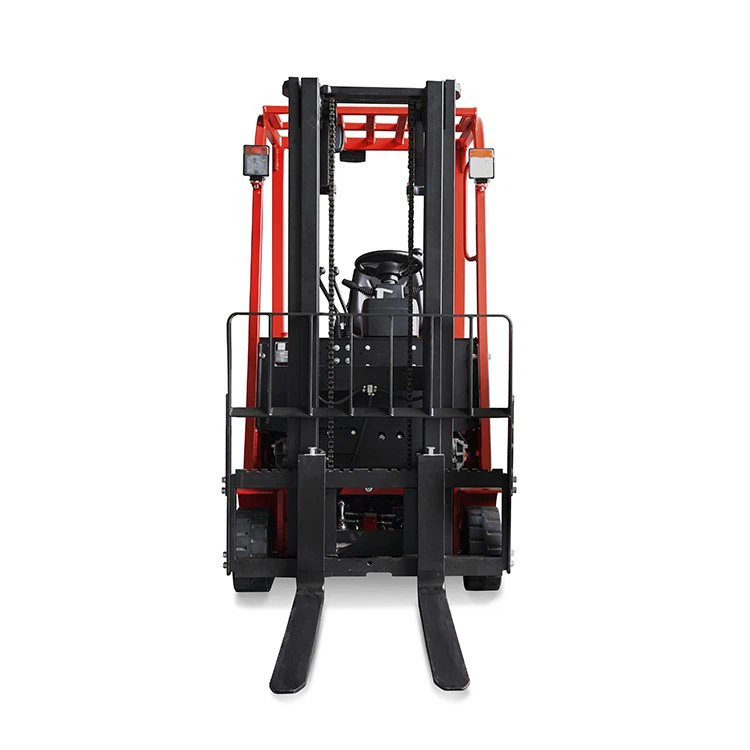

The controller can detect any faults or malfunctions in these components and store the diagnostic information. This information can be retrieved by maintenance personnel using a diagnostic tool or a computer interface. By analyzing this diagnostic data, maintenance personnel can quickly identify the root cause of the problem and take appropriate measures to repair it.
For example, if the controller detects that the battery voltage is too low, it can alert the operator to recharge the battery. If it detects a problem with the drive motor, such as overheating or abnormal current consumption, it can shut down the motor to prevent further damage and display an error code on the control panel.
This diagnostic and monitoring function not only helps to reduce the downtime of the forklift but also improves the overall reliability and safety of the machine. It allows for proactive maintenance, which can save time and money in the long run.
5. Integration with Other Systems
The controller in a three - wheel electric forklift is often integrated with other systems, such as the anti - collision system and the operator presence system.
The anti - collision system uses sensors to detect obstacles in the path of the forklift. When an obstacle is detected, the controller can automatically reduce the speed of the forklift or even stop it to prevent a collision. This integration enhances the safety of the forklift in a busy warehouse environment.
The operator presence system ensures that the forklift can only be operated when the operator is properly seated on the seat. The controller receives signals from the seat sensor and will disable the forklift's operation if the operator leaves the seat without properly parking the forklift. This helps to prevent unauthorized use of the forklift and reduces the risk of accidents.
The Importance of a High - Quality Controller
A high - quality controller is essential for the optimal performance of a three - wheel electric forklift. It can improve the efficiency, safety, and reliability of the forklift. A well - designed controller can also reduce the maintenance costs and extend the service life of the forklift.
When choosing a three - wheel electric forklift, it is important to consider the quality of the controller. Look for a forklift that is equipped with a controller from a reputable manufacturer, as it will have better performance and reliability. For example, our company offers a 1.5 Ton Electric Forklift with a state - of - the - art controller that provides all the functions mentioned above.
If you are in the market for a three - wheel electric forklift, we invite you to contact us for more information and to discuss your specific requirements. Our team of experts is ready to assist you in finding the right forklift for your business. Whether you need a forklift for a small warehouse or a large distribution center, we have the solutions to meet your needs.
References
- "Electric Forklift Technology Handbook", published by a leading industry association.
- Research papers on electric forklift control systems from academic journals.
- Manufacturer's technical documents on three - wheel electric forklift controllers.


