


Hey there! As a supplier of 1.5T Electric Pallet Jacks, I've seen firsthand how the design of these machines can make or break their maneuverability. In this blog, I'm gonna break down the key design factors that affect how easily a 1.5T Electric Pallet Jack can get around in a warehouse or any other industrial setting.
Fork Design
Let's start with the forks. The length, width, and shape of the forks play a huge role in maneuverability. Forks that are too long can be a pain to navigate in tight spaces. You might end up hitting shelves or other equipment. On the other hand, if they're too short, they might not be able to handle the pallets properly.
The width of the forks also matters. You need to make sure they fit the standard pallet sizes in your area. Most 1.5T Electric Pallet Jacks come with adjustable forks, which is a great feature. It allows you to adapt to different pallet widths, making the jack more versatile.
The shape of the forks can also impact maneuverability. Some forks have a tapered design at the end, which makes it easier to slide them under pallets. This is especially useful when dealing with uneven or dirty floors.
Wheel Design
Next up, we've got the wheels. The type, size, and arrangement of the wheels can all affect how well the pallet jack can move. There are usually two main types of wheels on a 1.5T Electric Pallet Jack: drive wheels and load wheels.
The drive wheels are responsible for moving the jack forward and backward. They need to have good traction to ensure smooth operation. Some drive wheels are made of rubber or polyurethane, which provide better grip on the floor. The size of the drive wheels also matters. Larger wheels can roll over obstacles more easily, but they might take up more space.
The load wheels support the weight of the pallet. They need to be strong and durable. Some load wheels are designed to swivel, which allows for better turning radius. This is crucial when you need to make sharp turns in a small area.
The arrangement of the wheels can also impact maneuverability. Some pallet jacks have a single drive wheel in the center, while others have two drive wheels. The single drive wheel design can provide better turning ability, but it might not be as stable as the two-drive wheel design.
Battery Placement
The placement of the battery can also affect the maneuverability of the 1.5T Electric Pallet Jack. The battery is one of the heaviest components of the jack, so its position can impact the center of gravity.
If the battery is placed too high, the jack might be more top-heavy and prone to tipping over. On the other hand, if it's placed too low, it might affect the ground clearance. A good design will place the battery in a way that maintains a stable center of gravity and provides enough ground clearance.
Some pallet jacks have a removable battery, which can be a great feature. It allows you to easily swap out the battery when it runs out of power, without having to move the entire jack. This can save a lot of time and effort, especially in a busy warehouse.
Control Design
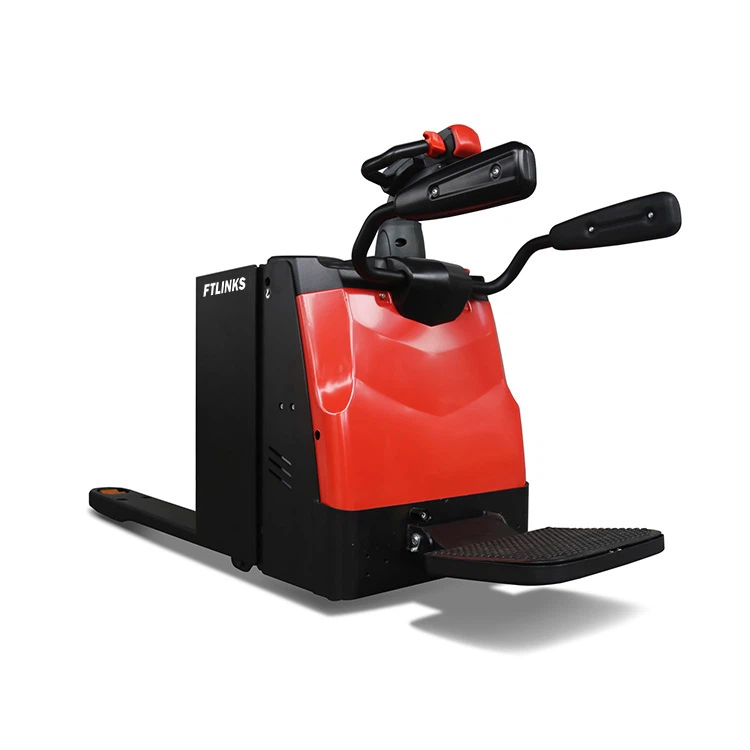
The control design is another important factor. You need to be able to easily operate the pallet jack with minimal effort. Most 1.5T Electric Pallet Jacks come with a control handle that allows you to control the speed, direction, and lifting function.
The control handle should be ergonomic and easy to grip. It should also be within easy reach of the operator. Some control handles have a multi-function design, which allows you to perform multiple tasks with a single button. This can make the operation more efficient.
The responsiveness of the controls is also crucial. You need to be able to quickly stop or start the jack when needed. A good design will ensure that the controls are sensitive enough to respond to your input, but not too sensitive that they cause accidental movements.
Frame Design
The frame design of the 1.5T Electric Pallet Jack can also impact its maneuverability. The frame needs to be strong and lightweight. A heavy frame can make the jack more difficult to move, while a weak frame might not be able to support the weight of the pallet.
Some frames are designed with a low profile, which allows the jack to fit under low-clearance pallets. This is useful in situations where you need to lift pallets in a confined space.
The shape of the frame can also affect how well the jack can navigate around obstacles. A streamlined frame design can reduce the chances of the jack getting stuck in tight spaces.
Impact on Different Environments
The design of the 1.5T Electric Pallet Jack can have different impacts depending on the environment in which it's used. In a small warehouse with narrow aisles, maneuverability is crucial. You need a jack that can easily turn and navigate in tight spaces.
In a large distribution center, where the distances are longer, speed and stability become more important. You might need a jack with a larger battery and a more powerful motor to cover more ground.
In an outdoor environment, the jack needs to be able to handle rough terrain. This means it should have larger wheels and a more robust frame design.

Conclusion
So, as you can see, the design of a 1.5T Electric Pallet Jack has a significant impact on its maneuverability. From the fork design to the control design, every aspect plays a role in how easily the jack can get around.
If you're in the market for a 1.5T Electric Pallet Jack, it's important to consider these design factors. Look for a jack that is designed to meet your specific needs and the requirements of your environment.
We offer a wide range of Electric Walkie Pallet Jack that are designed with maneuverability in mind. Our 1.0 Ton Counterbalanced Forklift and Electric Rider Pallet Jack also provide excellent performance and versatility.
If you're interested in learning more about our products or have any questions, feel free to reach out. We'd be happy to help you find the perfect pallet jack for your business.
References
- Industrial Forklift Handbook
- Warehouse Equipment Design Guide


