


Hey there! As a supplier of small electric forklifts, I often get asked about the steering system of these nifty machines. So, I thought I'd take a deep dive into what makes the steering system of a small electric forklift tick.
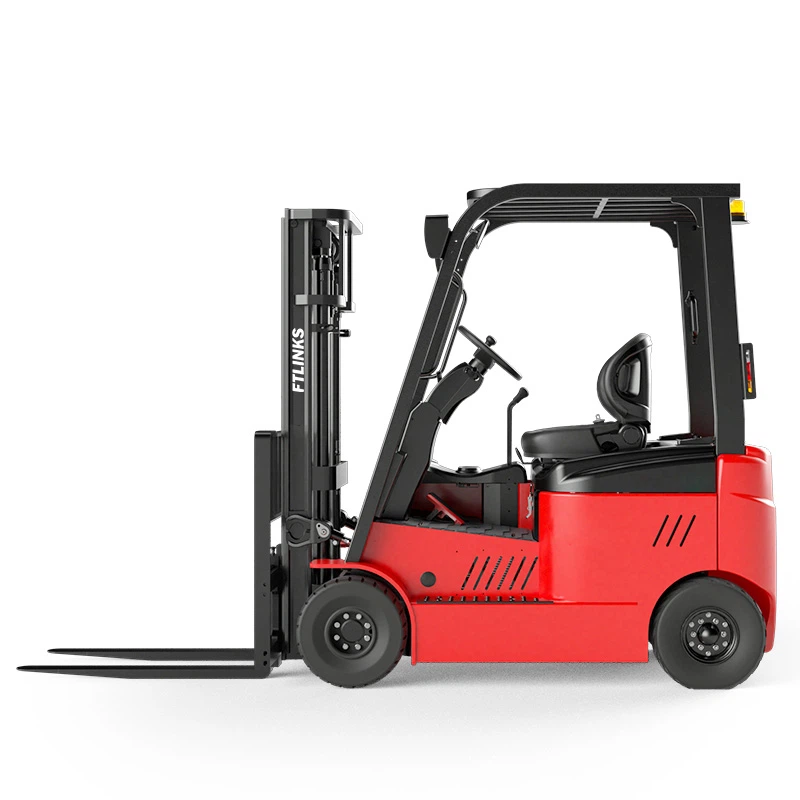

First off, let's understand why the steering system is so crucial. A good steering system in a small electric forklift is like the brain of a body. It controls the direction of the forklift, allowing it to move smoothly in tight spaces, turn corners with ease, and position loads accurately. In a warehouse or a small industrial setting, where space is often limited, a reliable steering system can significantly improve efficiency and safety.
There are a few different types of steering systems commonly found in small electric forklifts. The most basic one is the mechanical steering system. This system uses a series of gears, shafts, and linkages to transfer the driver's steering input from the steering wheel to the wheels of the forklift. It's a simple and robust design that has been around for a long time. The advantage of a mechanical steering system is its reliability and low cost. There aren't many electronic components that can fail, so it's less likely to break down. However, it can be a bit more physically demanding for the driver, especially when making sharp turns or maneuvering heavy loads.
Then, there's the power steering system. This is a more advanced option that uses hydraulic or electric assistance to make steering easier. In a hydraulic power steering system, a hydraulic pump provides the extra force needed to turn the wheels. The driver only has to apply a relatively small amount of force to the steering wheel, and the hydraulic system does the rest. Electric power steering, on the other hand, uses an electric motor to assist with steering. It's more energy - efficient than hydraulic power steering and can be more precisely controlled. Power steering is a great option for operators who need to make frequent turns or who are handling heavy loads on a regular basis. It reduces driver fatigue and makes the forklift easier to operate, especially for those who may not have a lot of physical strength.
Another type of steering system you might encounter in small electric forklifts is the articulated steering system. In an articulated forklift, the forklift is divided into two parts that are connected by a hinge. The steering is achieved by pivoting the front and rear parts of the forklift relative to each other. This allows for extremely tight turning radii, making it ideal for use in narrow aisles and confined spaces. Articulated steering forklifts can often turn on the spot, which is a huge advantage in a busy warehouse environment.
Now, let's talk about some of the key components of a typical steering system in a small electric forklift. The steering wheel is the obvious starting point. It's where the driver inputs the steering commands. The steering column connects the steering wheel to the rest of the steering mechanism. It usually contains a steering shaft that transfers the rotational motion from the steering wheel to the gears or linkages below.
The steering gear is another important component. It's responsible for converting the rotational motion of the steering shaft into the linear motion needed to turn the wheels. There are different types of steering gears, such as rack - and - pinion and recirculating ball steering gears. Rack - and - pinion steering gears are simple and efficient, and they're commonly used in modern small electric forklifts. They consist of a pinion gear (connected to the steering shaft) and a rack (a straight bar with teeth). As the pinion rotates, it moves the rack back and forth, which in turn moves the wheels.
The tie rods are also crucial. They connect the steering gear to the wheels and transmit the steering force from the steering gear to the wheels. They need to be strong and durable to withstand the forces involved in steering.
When it comes to choosing the right steering system for a small electric forklift, there are a few factors to consider. The type of work environment is a big one. If the forklift will be used in a large, open area with plenty of space to maneuver, a mechanical steering system might be sufficient. But if it's going to be used in a tight warehouse with narrow aisles, a power steering or articulated steering system would be a better choice.
The frequency of use and the weight of the loads also matter. If the forklift will be used constantly throughout the day and will be handling heavy loads, a power steering system will make the operator's job much easier. On the other hand, if the forklift is only used occasionally and for light loads, a mechanical steering system might be all you need.
At our company, we offer a range of small electric forklifts with different steering systems to meet the diverse needs of our customers. For example, our 3.0 Ton Electric Forklift comes with an option of either a mechanical or power steering system. This allows our customers to choose the one that best suits their requirements and budget.
If you're dealing with explosive or hazardous environments, we also have the 5.0 Ton Explosion - proof Forklift. This forklift is designed with safety in mind and has a reliable steering system that can handle the tough conditions.
Our Electric Counterbalance Trucks are another popular choice. They come with advanced steering technologies that provide smooth and precise control, making them easy to operate in various work environments.
In conclusion, the steering system of a small electric forklift is a complex but essential part of the machine. It affects the forklift's maneuverability, efficiency, and the comfort of the operator. Whether you're a small business owner looking to improve your warehouse operations or a large industrial company in need of reliable material handling equipment, choosing the right steering system is crucial.
If you're interested in learning more about our small electric forklifts or have any questions about the steering systems, don't hesitate to get in touch with us. We're here to help you find the perfect forklift for your needs.
References:
- Industrial Forklift Handbook
- Electric Forklift Design and Technology Manual


