Forklift Family Unveiled! From "type" to "maintenance", even beginners can easily get it
Forklifts that require regular inspection as special equipment are divided into the following categories:
1. Balance weight forklift: handling, loading and unloading of palletized goods in the factory area. Balance based on the weight of the vehicle
2. Forward moving forklift: It is used for the handling and decoration of palletized goods in the factory area, with extended legs, and can be moved by door frames or forks for load handling.
3. Side mounted forklift: can be applied to work in areas such as passages, indoor and outdoor. The door frame or fork frame is located between the two axles, extending and retracting horizontally perpendicular to the direction of the vehicle's movement, on one side of the vehicle, for operation.
4. Pin type forklift: commonly used for operations in warehouses, heavy-duty trucks, and containers. With outward extending legs, the fork is located between the two legs, and the center of gravity of the load is always within the stable support surface.
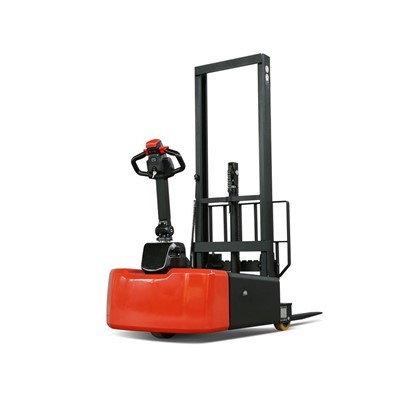
5. Pallet stacking truck: the stacking of goods in the factory. The fork is located directly above the extended leg.
6. Three way stacker truck: commonly used for working in narrow spaces. A high lift stacker vehicle capable of stacking or picking up goods in front of or on any side of the vehicle during operation.
Guidelines for the Use of Special Equipment
1. Newly purchased forklifts need to be inspected by a special equipment inspection agency before being put into use. After passing the inspection and registering for use, they can be put into use.
2. Forklift operators must hold a valid Special Equipment Operator Certificate (Forklift Driver N1).
3. Regular maintenance and upkeep, strict standardization of operations, and elimination of illegal operations.
4. The use of unverified special equipment, the use of unregistered special equipment, and unlicensed workers are all illegal acts. Once verified, they will be punished in accordance with the Special Equipment Safety Law of the People's Republic of China.
maintenance and repair
In many enterprises, the concept of "repairing forklifts only when they break down" is still common, and maintenance is based on intuition, with unclear responsibilities. Who is responsible and how to do it is always a confused account. We have compiled 10 common forklift maintenance knowledge questions.
1. Why do forklifts need regular maintenance?
Answer: During long-term use, forklifts may experience natural wear and tear on their components, oil aging, and decreased battery performance. If regular maintenance is not carried out, it can lead to performance degradation, frequent malfunctions, and in severe cases, safety accidents and equipment scrapping. Therefore, the purpose of maintenance is to extend the service life of equipment, ensure safe use, and reduce maintenance costs.
2. What are the consequences of inadequate maintenance?
Answer: The following problems are likely to occur due to improper maintenance: safety hazards such as brake failure and steering jamming; Hydraulic oil leakage causes weak lifting or shaking; Battery bulging, reduced battery life, and shortened service life; Abnormal tire wear affects load stability. These problems are often "small first, big later", and the losses are even greater when the equipment is completely paralyzed.
3. How should enterprises standardize the maintenance frequency of forklifts?
Answer: Refer to the manufacturer's instructions to develop the "Forklift Maintenance Cycle Table"; Introduce equipment management systems (such as MES, CMMS) for reminders and records; Establish a three-level system of "first maintenance, fixed maintenance, and repair"; Regularly review the implementation of maintenance to ensure standardization.
4. Does the brake system need maintenance?
Answer: It is necessary. Inadequate brake maintenance is one of the common root causes of forklift accidents. Many brake system problems are still functional but significantly reduced in performance, such as thin brake pads; Slight air leakage in the brake pipeline; The oil pressure feedback is sluggish. It is recommended to check the thickness of brake pads, brake oil level, and brake sensitivity once a week. If the brake becomes soft, hard, or responds abnormally, it should be dealt with immediately.
5. How to properly maintain tires?
Answer: Check if the air pressure meets the standard (for inflatable tires); Check for cuts, bulges, and severe wear and tear; Check whether the solid tire is cracked or deformed; Regular wheel position exchange to extend service life.
6. Do forklift lights, horns, and other electrical equipment need maintenance?
Answer: Yes. Especially when working at night or in narrow environments: check whether the headlights, turn signals, and warning lights are damaged; Is the horn loud and sensitive; Is there any short circuit or aging phenomenon in the circuit.
7. How to maintain forklift chains and frames?
Answer: Lubricate the chain every week to prevent rust and jamming; Check the tightness of the chain and whether it is broken; The door frame guide rail should be clean and free of foreign objects, and regularly refueled. The chain is the 'safety line' for lifting and lowering, don't wait until it breaks to regret it.
8. Does forklift maintenance require certified personnel to operate?
Answer: The qualification requirements for forklift maintenance personnel need to be differentiated according to the maintenance content. Daily maintenance (such as cleaning, lubrication, liquid level inspection, etc.): No certified personnel are required to operate, but the executing personnel need to undergo internal training within the company to master basic maintenance skills. Maintenance involving safety components of special equipment (such as braking systems, hydraulic systems, electrical systems, etc.): The maintenance work must be undertaken by units that have obtained the "Special Equipment Installation and Maintenance License", and the operators must have corresponding professional abilities to ensure that the maintenance quality meets the requirements of regulations such as the "Special Equipment Safety Law".
9. What should companies pay attention to when outsourcing maintenance services?
Answer: Attention should be paid to whether the other party has legal qualifications and work-related injury insurance; Do you possess the professional competence for this brand/model of forklift; Has a Maintenance Agreement been signed to clarify responsibilities, response times, and risk allocation; Have safety briefings and risk assessments been conducted before maintenance. Suggest signing confidentiality and shared responsibility clauses to avoid joint accidents caused by malfunctions.
10. How to ensure the safety of operators during forklift maintenance?
Answer: The "Five Step Maintenance Procedure" must be followed: ① Parking; ② Cut off the power (or turn off the engine); ③ Hang the "under repair" sign; ④ Jack and limit support must be used; ⑤ The body is not allowed to enter unsupported dangerous areas. Wear PPE simultaneously: protective gloves, anti smashing shoes, goggles, etc.